

The Hartsville Nuclear Plant had its share of problems, but one that is often overlooked or forgotten had to do with a dead man鈥檚 grave.
When TVA was looking for a location to build its proposed 鈥淲orld鈥檚 Largest Nuclear Plant,鈥� it had to consider many things.
As a good real estate agent will tell you, it鈥檚 all about 鈥渓ocation, location, location.鈥�
A potential problem with large construction projects is the location of a cemetery on the property.
It is a state law that you can鈥檛 destroy a cemetery on your property 鈥� no matter its size or condition.
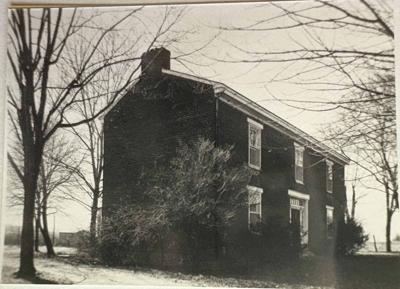
The land chosen by TVA was farm land with only a few homes and several barns. Yet, one home, a two-story brick house, dating back to the early 1800s, had a family cemetery.
This was a small issue, because state law does allow a cemetery to be moved, but one of the graves was that of a fellow with quite a history of his own 鈥� the Reverend John McGee.
While the name won鈥檛 be familiar to most of our readers, his name was heard often on the frontier of Tennessee.
John McGee and his brother William were both early preachers, traveling by horseback to the small settlements springing up in the hills and forests as people moved into the state, building their log homes and clearing land for planting.
William was a pioneer Presbyterian minister and is said to have preached the very first sermon in what is now Wilson County.
John McGee, however, was a Methodist preacher and is considered the 鈥渇ather of the Methodist church in Middle Tennessee.鈥�
The two faiths were prominent on the frontier, and it would take time for other denominations to appear and take root.
The frontier was rough and tumble.
Dirt roads, 鈥渇ording鈥� creeks because there were no bridges, Indian troubles, no hotels with hot showers and TV, these early preachers are called 鈥淐ircuit Riders鈥� because they traveled a regular route, or circuit, to preach, marry and bury.
A man of the cloth had to have deep convictions to spread the gospel.
The McGee brothers did.
Coinciding with their efforts was a phenomenon known as 鈥渢he Great Revival,鈥� where large crowds would gather to hear all day preaching and singing and lives were 鈥渟aved鈥� by confession of sins and baptisms were made into the faith.
Oh, there was also much 鈥渟houting鈥� to the heavens!
One of the Great Revival preachers wrote, 鈥淚 went through the house shouting and extorting with all possible ecstasy and energy, and the floor was soon covered with the slain. Their screams for mercy pierced the heavens, and mercy came down.鈥�
There early revivals were usually held under brush arbors constructed for the event, and folks would load up their families and bedding and provisions and arrive at the revival site prepared to stay for days.
There was preaching in the morning, afternoon and evening with singing and confession.
John McGee was one of the most celebrated preachers of the Great Revival. His two-story brick home would have been an impressive sight in the Dixon Springs community of log homes, and was befitting a man of his stature.
Few of those early brick homes with large rock foundations are still standing today.
John McGee鈥檚 home, having survived for close to 200 years, would have to go 鈥� it sat smack dab where the nuclear plant would be built.
And, the grave would have to be moved.
Just where does one move a grave?
The Dixon Springs cemetery has a number of graves moved there when the Cordell Hull Dam was built.
While that was an option, the Hartsville First United Methodist Church stepped up and asked to have McGee鈥檚 body exhumed and placed on their property on River Street in Hartsville.
John McGee died in 1836, at age 75.
When he was 74, he developed a tumor on his arm. The growth was removed by a local doctor, but this was at a time when cutting on bodies and ignorance of germs were a dangerous mix.
The arm did not heal, and it is thought that gangrene set in.
The doctor cut off the old man鈥檚 arm in an effort to stop the spread of infection, but he died a few days later.
A large rock slab covered his grave.
When the grave was dug up, there was little to be found, only some dark earth and a few bones remained of the strong hearted old man.
Another early preacher, John Carr, also a circuit rider, wrote this about men like John and William McGee, 鈥淲hen our former preachers prayed, they seemed to pray right up into heaven.鈥�
Today, just a few feet away from the stained glass windows of the Hartsville congregation, the Reverend John McGee鈥檚 bones lie in rest, a fitting place for such a devout fellow, where every Sunday his spirit might listen to a rousing sermon and might enjoy some old time hymns of the faith.


(0) comments
Welcome to the discussion.
Log In
Keep it Clean. Please avoid obscene, vulgar, lewd, racist or sexually-oriented language.
PLEASE TURN OFF YOUR CAPS LOCK.
Don't Threaten. Threats of harming another person will not be tolerated.
Be Truthful. Don't knowingly lie about anyone or anything.
Be Nice. No racism, sexism or any sort of -ism that is degrading to another person.
Be Proactive. Use the 'Report' link on each comment to let us know of abusive posts.
Share with Us. We'd love to hear eyewitness accounts, the history behind an article.